TALHeroTM Awards 2026
We are proud to announce the TALHeroTM Awardees of 2026!
We believe every nominee is a hero. After thoughtful review by our jury, here are the selected heroes of 2026 — individuals creating a better, more compassionate world.
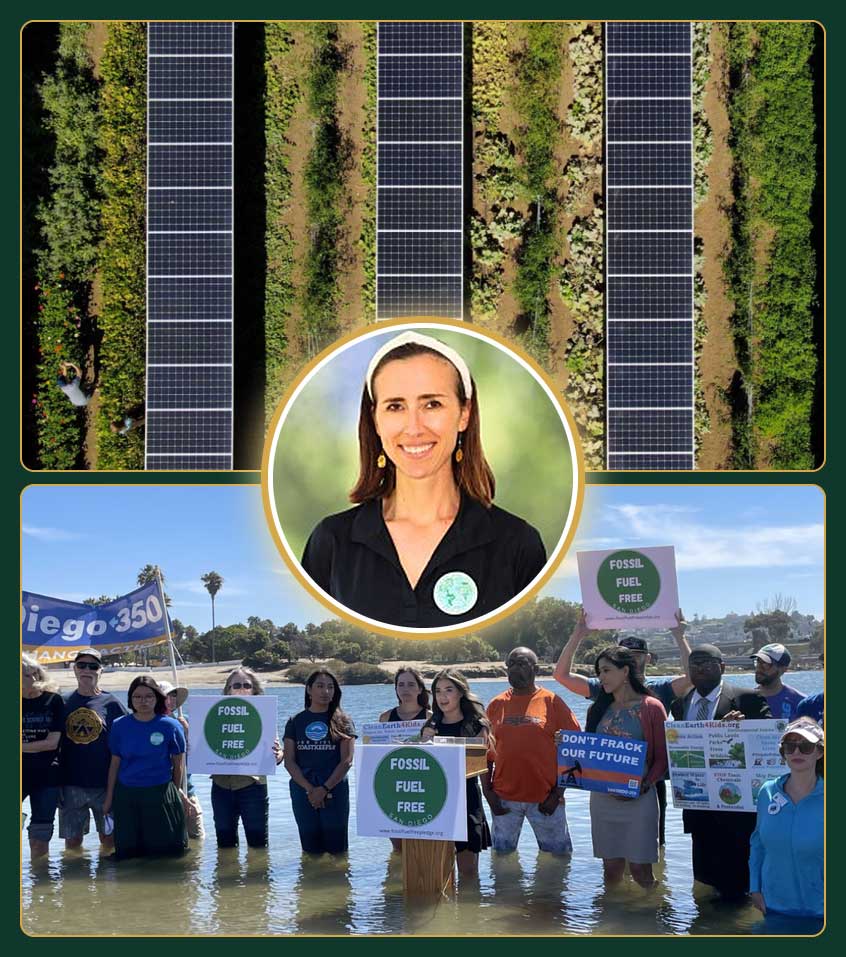
Tara Hammond
Climate change can feel enormous. It seems too big for any one person, too complex for any one community, and too distant from everyday life to act on. Tara Hammond has spent years showing that it does not have to feel that way. She turns climate concern into practical action through clean energy, advocacy, partnerships and community-centered solutions.
As Founder and Executive Director of the Hammond Climate Solutions Foundation, Tara works where climate action and climate justice meet. She helps communities and nonprofits adopt solutions that reduce emissions while also improving resilience and access to clean energy.
One example of this work is the Solar Moonshot Program, which tackles a simple but significant barrier. Many nonprofits want to switch to solar energy, but the upfront cost often stands in the way. The program makes that transition more affordable, so organizations can lower their energy costs and put more resources toward their missions. To date, it has helped more than 170 nonprofits across the United States move toward solar power.
Tara’s work reaches well beyond individual projects. It includes years of coalition-building, community education, and advocacy for policies that support renewable energy and environmental justice. Her approach recognizes that climate action is as much about people as it is about technology. It asks important questions: Who benefits from clean energy? Which communities receive investment? How can climate solutions create healthier neighborhoods, stronger local organizations and fairer opportunities?
Through her leadership, Tara is making climate solutions practical, local and collaborative. In doing so, she is showing that meaningful progress does not always begin with one massive solution. Sometimes it begins with a single organization, a single rooftop, a single partnership, and a community that decides to act.
In recognition of her leadership in advancing clean energy, climate justice, and community-based environmental solutions, Tara Hammond is honored as a TALHero 2026 recipient in the Changemaker Category.
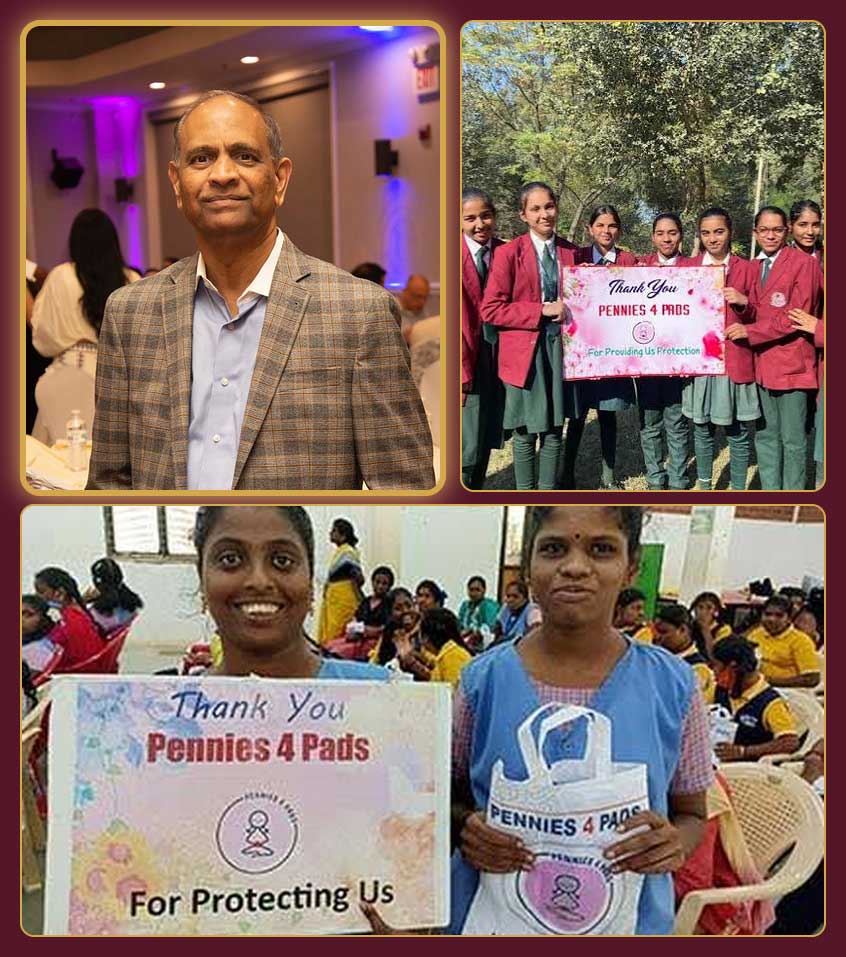
Sri Subramaniam
For millions of girls, a period is not simply a health issue. It can decide whether they go to school that day, whether they take part with confidence, or whether something entirely natural becomes a source of anxiety and shame.
Sri Subramaniam set out to tackle this problem in a deeply practical way. Through Pennies 4 Pads, he works to give girls consistent access to sanitary pads while building awareness of menstrual health and hygiene. His guiding belief is simple: dignity should never depend on whether a family can afford a basic menstrual product.
The model goes well beyond distribution. Pennies 4 Pads reaches girls directly through schools, community groups and volunteers, and it pairs sanitary products with menstrual-health education so that access and awareness grow together. The organization has also developed training for schoolgirls, younger children, caregivers and boys, helping entire communities talk more openly about menstruation.
This matters because period poverty affects health, confidence and education alike. A single month’s supply meets an immediate need. Sri’s approach recognizes that what truly helps girls thrive is reliable access, month after month, combined with education.
That consistency has become central to Pennies 4 Pads. The organization has supported tens of thousands of girls, including students in rural India and girls with disabilities, who often face even greater barriers to menstrual care.
Sri Subramaniam has taken an issue that is too often avoided in conversation and turned it into a visible, practical movement for dignity. Because of that work, more girls do not have to miss school, withdraw from daily life, or feel ashamed for lack of something so basic. For them, each month becomes one more uninterrupted chance to learn.
In recognition of his commitment to menstrual dignity, girls’ education, and sustained community action, Sri Subramaniam is honored as a TALHero 2026 recipient in the Changemaker Category.
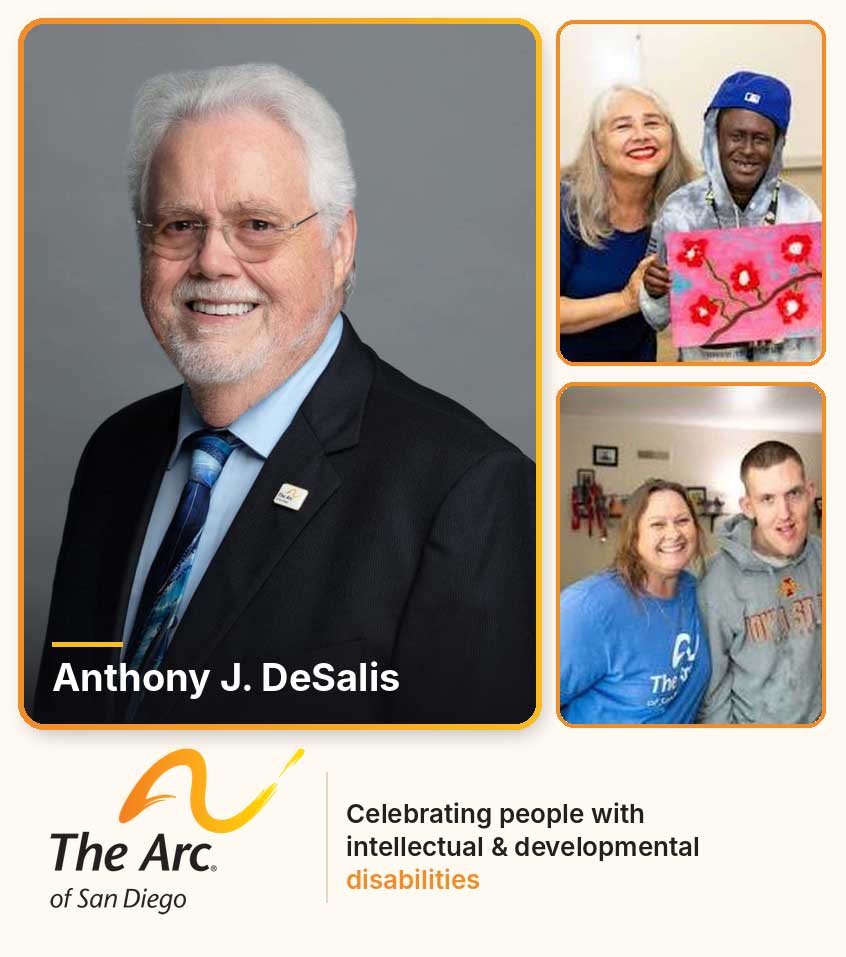
Anthony J. DeSalis
Building a World Where Everyone Belongs
A meaningful life is built on more than care alone. It is built on choice, opportunity, independence and belonging. For more than three decades, Anthony J. DeSalis has dedicated his career to making those possibilities real for people with intellectual and developmental disabilities.
His journey with The Arc of San Diego began on the front lines, working directly with individuals as a workshop floor supervisor. Over the years, that experience grew into organizational leadership. Today, as President and CEO, he leads one of San Diego’s longest-standing organizations supporting children and adults with disabilities.
People with developmental disabilities and their families often face challenges across education, employment, housing, transportation, healthcare and full participation in community life. The Arc of San Diego works across many of these areas. Its model is not about doing everything for a person. It is about helping each individual build greater independence and take part in life on their own terms.
Under Anthony’s leadership, the organization has continued to strengthen programs and facilities that support people at every stage of life. This includes a major capital campaign that renovated a center in Chula Vista serving hundreds of children and adults with disabilities each year.
Anthony’s contribution, however, is not measured only in buildings or programs. It is reflected in a career built on one steady conviction: people with disabilities deserve the same opportunities to grow, contribute, make choices and belong to their communities. Reaching that goal takes more than services. It takes advocacy, partnerships, accessible systems, and leadership that listens to the people those systems are meant to serve.
His story shows that long-term changemaking is rarely defined by a single dramatic moment. It is defined by years of showing up, building systems, and creating opportunities that help more people live with independence and dignity.
In recognition of his sustained leadership and commitment to empowering people with disabilities, Anthony J. DeSalis is honored as a TALHero 2026 recipient in the Changemaker Category.
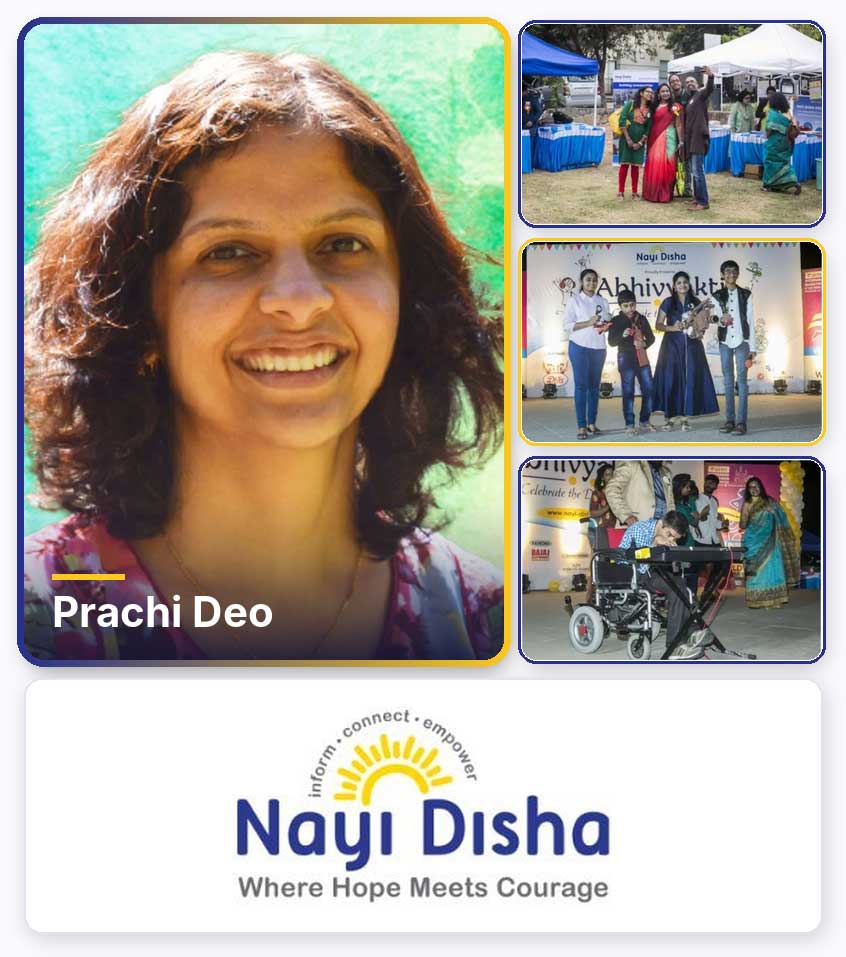
Prachi Deo
A New Direction for Families
For parents of a child with an intellectual or developmental disability, one of the hardest questions is often the simplest: what do we do next?
Families may need to understand a diagnosis, find a therapist, choose the right school, learn about government benefits, or simply talk to another parent who has walked the same road. Too often, they are left to find these answers on their own.
Prachi Deo understands this from her own family. Her elder brother has Down syndrome, and she watched her parents struggle to find reliable information and support. After more than a decade working in technology, she founded Nayi Disha in Hyderabad in 2015.
Rather than opening another special school or therapy centre, Prachi focused on a gap that is easy to overlook: the family. Parents and caregivers stay with a person with a disability throughout life, yet they are rarely given the tools and support they need.
Nayi Disha brings that support together in one place. Its technology-enabled platform serves families of people with autism, Down syndrome and other intellectual and developmental disabilities. It offers verified information, practical resources, a directory of service providers, parent communities, support groups and a national multi-channel helpline. The Government of India’s Department of Empowerment of Persons with Disabilities lists Nayi Disha as a parent resource and support platform.
The growth has been remarkable. What began with a single caregiver now connects 450,000 families. One support group has become 29, and work that started in one state now reaches 10.
Prachi’s model also goes beyond sharing information. Parents and caregivers are being developed as community leaders who can guide other families and advocate for better disability services. That approach is now reaching public systems as well. According to Ashoka, elements of Nayi Disha’s caregiving model are being adopted by government systems in Telangana, Maharashtra, Madhya Pradesh, Uttar Pradesh and Jharkhand.
What makes Prachi’s work distinctive is who she chose to empower. Instead of focusing only on the person with a disability, she built an ecosystem around the people who care for them. An informed, connected and confident family can shape a person’s opportunities for a lifetime.
In recognition of empowering families and caregivers to build better futures for people with intellectual and developmental disabilities, Prachi Deo is honored as a TALHero 2026 recipient in the Changemaker Category.
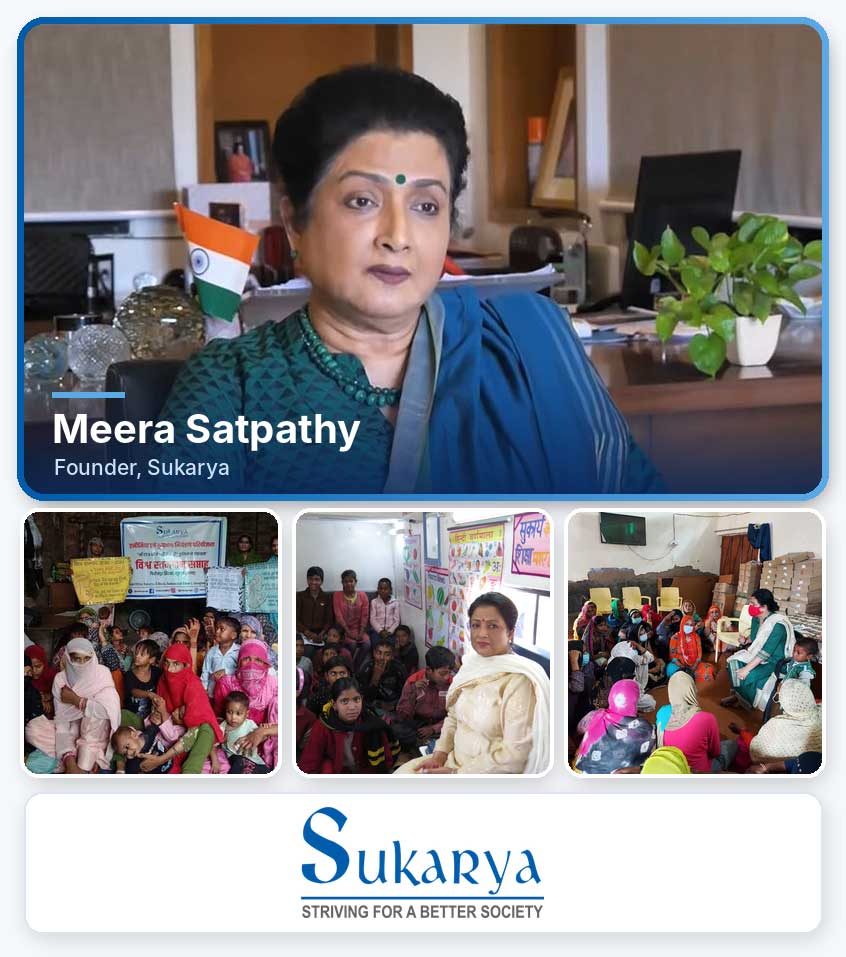
Meera Satpathy
In many underserved communities, problems rarely arrive one at a time. Poor health, malnutrition, limited education and women’s economic dependence often affect the same family, at the same time. Solving one while ignoring the others rarely brings lasting change.
Meera Satpathy recognized this early. In 1998, she founded Sukarya to respond to these connected challenges together. Over nearly three decades, she has grown it from a small health-focused initiative into a community-development organization working with women, children and adolescent girls in rural villages and urban slums.
Maternal and child health remains at the heart of the work. Sukarya supports pregnant women and mothers with antenatal and postnatal care, safe institutional deliveries, immunisation, nutrition and child health. Rather than relying only on occasional medical camps, it trains community health workers and local volunteers who stay connected with families and encourage them to keep using healthcare services.
Nutrition is closely tied to this effort. Sukarya’s programmes tackle malnutrition among mothers and children through screening, nutrition education, referrals and practical guidance on affordable, nutritious food.
Meera extended the model to adolescent girls through Education on Wheels, which brings learning and life skills directly into underserved communities. Girls receive support in literacy, health, nutrition, menstrual hygiene, reproductive health and digital awareness, along with the confidence to speak up for themselves.
Economic independence completes the picture. Through vocational skills, entrepreneurship and livelihood programmes, women build ways to earn an income and gain a stronger voice in decisions that affect their families.
Sukarya reports that its programmes have reached millions of people across more than 700 villages and urban slums, in Delhi-NCR, Haryana, Rajasthan and beyond.
What makes Meera’s work distinctive is how these efforts connect around the same woman and family. A woman may first come to Sukarya for pregnancy or nutrition support and later receive livelihood training, while her daughter joins an adolescent education programme. Local women are also trained as health workers and community leaders.
In this way, her model sees women not only as people who receive services, but as people who can improve the health, education and economic wellbeing of their families and communities.
In recognition of nearly three decades of empowering women and strengthening families through connected health, education and livelihood support, Meera Satpathy is honored as a TALHero 2026 recipient in the Changemaker Category.
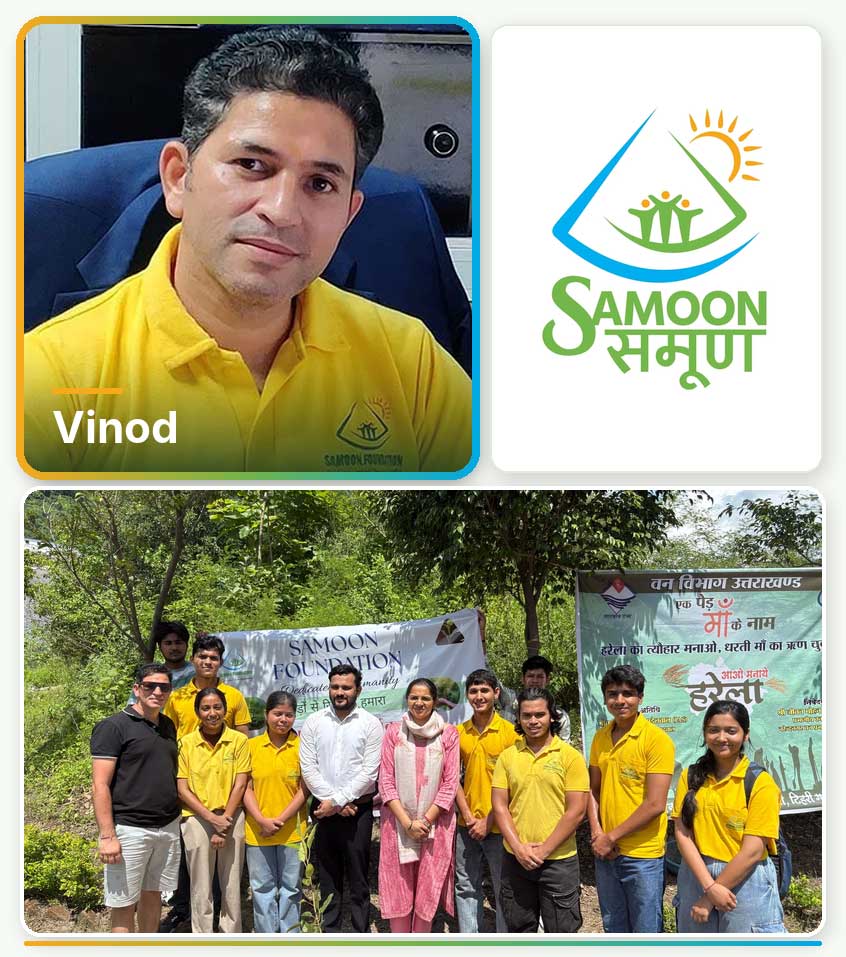
Vinod Singh Jethuri
Closing the Distance
Growing up in Tehri Garhwal, Uttarakhand, Vinod Singh Jethuri saw how geography itself can limit opportunity.
For families in remote Himalayan communities, getting good education, computer training, career guidance, healthcare or a job can mean travelling long distances. Many young people eventually leave their villages, not because they want to, but because the opportunities they need simply are not available close to home.
Vinod founded Samoon Foundation to close some of these gaps. Although he has worked in the education sector in Dubai for more than 16 years, he has never stepped away from his roots. He continues to build and support programmes in rural Uttarakhand, connecting resources and volunteers with communities in his home region.
Education sits at the centre of this work. Through Samoon Adarsh Vidyalaya, Samoon Computer Training Institutes and Samoon Excellence Coaching Centres, the Foundation offers educational support, computer literacy, coaching and career guidance to students who would otherwise have little access to such facilities.
The work also reaches into livelihoods. At Samoon Skill Development Centres, women and young people learn vocational and income-generating skills that help them become more financially independent. The Foundation also provides healthcare assistance, supports vulnerable families, and carries out environmental and humanitarian work.
What stands out in Vinod’s approach is his determination to build services within remote communities, rather than expecting people to travel to cities to find them. The programmes also connect with one another. A rural student can receive educational support and computer skills. A young person can find career guidance or job training. A woman can learn a trade that helps her earn an income.
At its core, Vinod Singh Jethuri’s work is about narrowing the opportunity gap created by geography. Instead of tackling one issue in isolation, he is building small education, technology and livelihood institutions inside Himalayan communities, so that rural families can find opportunity closer to where they live.
In recognition of bringing education, skills and opportunity closer to remote Himalayan communities, Vinod Singh Jethuri is honored as a TALHero 2026 recipient in the Changemaker Category.
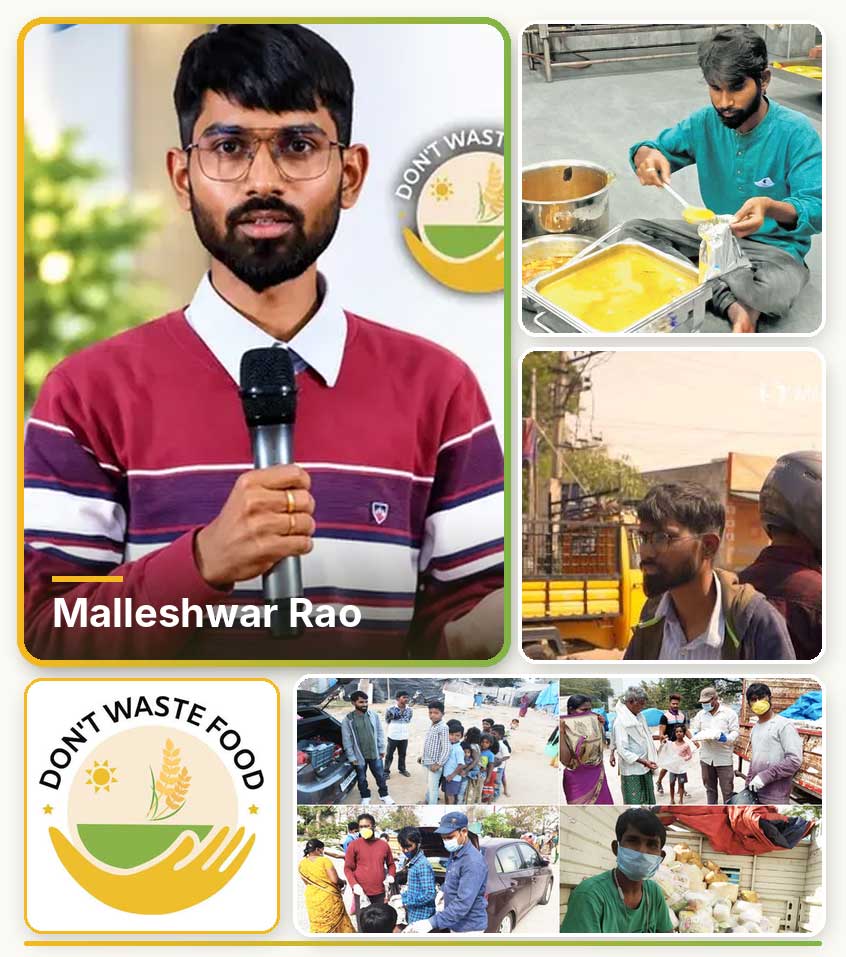
Malleshwar rao
No Meal Left Behind · Every Plate Counts
In every city, two problems sit side by side. Large amounts of good, edible food are thrown away, while people just a few streets away go to bed hungry. Malleshwar Rao’s work connects the two.
His understanding of hunger is deeply personal. Growing up in difficult circumstances, he experienced hunger and child labour himself. In 2012, he started Don’t Waste Food in Hyderabad, with a clear goal: to stop usable surplus food from going to waste and get it to people who need it.
The model is simple, but it depends on fast coordination. Volunteers identify and collect surplus food from functions, events, hotels and other sources. That food is then shared with people facing hunger, including those living on the streets and in vulnerable communities.
The scale is impressive. The initiative reports distributing more than 32 lakh meals in the last three years alone.
Behind those meals is a dedicated network of volunteers. Food rescue is a race against time. Unlike clothes or other donations, cooked food cannot be stored for long. Volunteers must respond quickly, collect what is available, and make sure it reaches people while it is still fresh and safe to eat.
Malleshwar’s work also tackles the problem before food becomes waste. By working with individuals, event organisers and food businesses, Don’t Waste Food encourages people to rethink what happens to extra food and to connect with redistribution networks instead of throwing it away.
The result is a double impact from a single effort: less food wasted, and more people fed.
What sets Malleshwar Rao’s work apart is how he turned a simple community idea into an organised redistribution network. Rather than producing more food to fight hunger, he asks a practical question: can food that has already been cooked reach someone before it is wasted?
His own experience of hunger has grown into a lasting volunteer movement, one that links people with surplus food to people who need a meal, and makes every community member part of the solution.
In recognition of turning personal experience into a community movement against hunger and food waste, Malleshwar Rao receives a TALHero 2026 Jury Special Mention in the Changemaker Category.
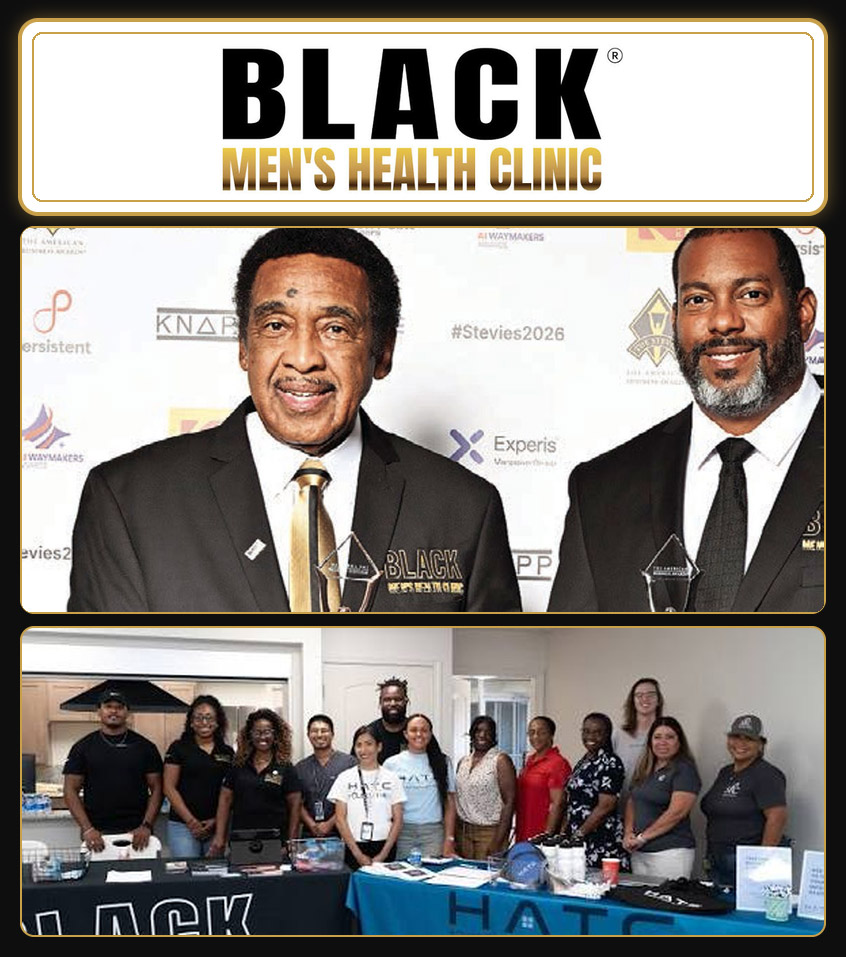
The Black Men's Health Clinic (BMHC)
Beyond the First Appointment
Getting someone to a doctor can change their life. But what happens after that first appointment?
For many people in underserved communities, what comes next is a fractured healthcare system that is hard to navigate. A referral may be hard to follow up on. Transportation can become a barrier. Behavioral-health support may sit in a completely different system. Social needs can interfere with treatment. And sometimes, people simply fall through the gaps.
The Black Men’s Health Clinic (BMHC) is working to make sure that does not happen.
Based in Central Texas, BMHC was built around a simple but important idea: access to healthcare is not enough if people cannot stay connected to care. Its model goes beyond pointing someone toward a doctor. It treats care as one continuous journey.
Community-based navigators help individuals move between medical care, behavioral-health services and social-support systems. Referrals are coordinated, partners stay in communication, and people are supported through a process that could otherwise feel complicated and disjointed. This matters most for individuals and families facing barriers of cost, transportation, trust and access to the right services.
In this way, BMHC acts as a bridge, bringing healthcare systems, community organizations and social services together around the individual. That approach is producing measurable results. Patient visits have grown significantly, and the organization has maintained strong continuity between patients and their providers. Its behavioral-health work has also shown meaningful improvement among those receiving support.
Perhaps the larger impact, however, is the model itself. BMHC is demonstrating that healthcare does not end when a patient walks out of a clinic. Better health often depends on what happens next: whether someone follows through, whether another service is within reach, whether a trusted person helps guide the way, and whether care continues when life gets complicated.
In a system that can often feel fragmented, BMHC is building continuity around people. It is not simply opening the door to healthcare. It is helping people stay connected, supported and cared for.
In recognition of this meaningful work and its lasting community impact, The Black Men’s Health Clinic is honored as a TALHero 2026 recipient in the Nonprofit Category.
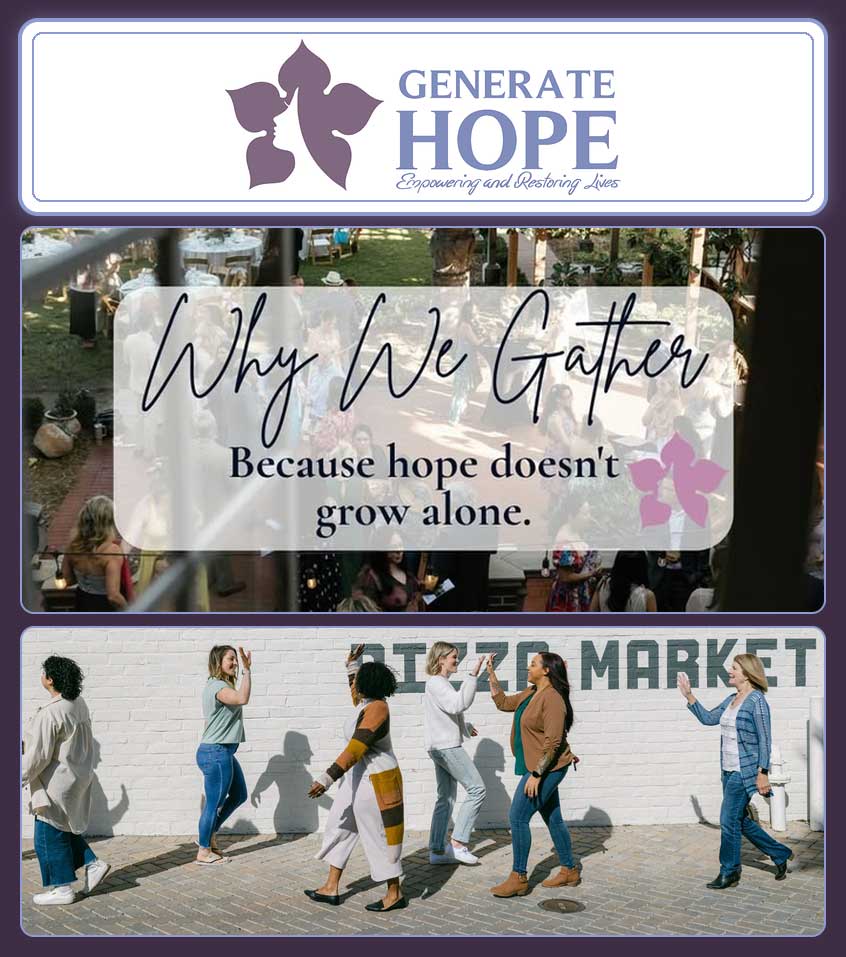
GenerateHope
Walking With Women, Every Step of the Way
For someone escaping exploitation, getting out is only the first step. What follows can be even harder: healing from deep trauma, finding a safe place to live, rebuilding trust, returning to education, preparing for work, and learning to live independently again.
GenerateHope was founded in San Diego to walk with women through that long journey. Its trauma-informed approach is built around three priorities: safety, healing and independence. Housing, therapy, education, career preparation, life-skills development and case management come together in one model, so that survivors are never expected to rebuild their lives alone.
What sets this model apart is its continuity. Women can begin in restorative residential care and gradually move toward greater independence. Their support does not end when they leave the residential program. It continues through aftercare, alumni support, career guidance, housing connections and community-based case management.
GenerateHope also recognizes that not every survivor can enter a residential program. For women who need help while continuing to live in the community, it offers community-based services that meet them where they are.
Over the years, this work has grown from San Diego to Northern Colorado. More than 200 women have been welcomed into GenerateHope’s programs, and thousands more are reached each year through education and prevention efforts.
The real impact, however, is measured one life at a time. Women begin to trust again. They return to school, prepare for careers and move from dependence toward independence. GenerateHope understands that rebuilding a life cannot be rushed. It takes time, stability, relationships and people willing to stay beside someone through the hardest stages of recovery.
In recognition of this enduring commitment to long-term healing, GenerateHope is honored as a TALHero 2026 recipient in the Nonprofit Category.
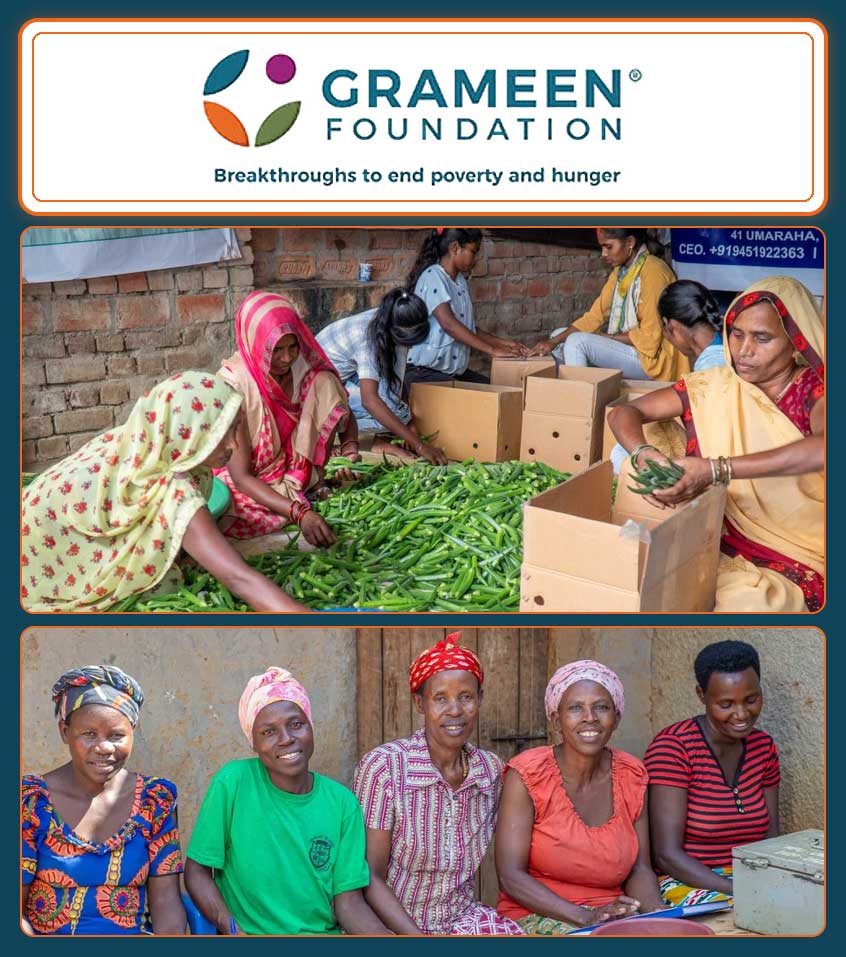
Grameen Foundation USA
Where Opportunity Meets Her Power
Poverty is rarely caused by a single problem, and it cannot be solved by a single solution. A woman may have every determination to build a better future for her family. Yet without access to finance, training, markets, technology or the right support, opportunity can remain out of reach.
Grameen Foundation USA works at exactly that intersection. Founded in 1997, the organization has spent nearly three decades developing ways to help people living in poverty, especially women, build lasting pathways to economic independence. Since 2016 alone, its programs have reached more than 29 million people.
Its approach goes well beyond financial assistance. It brings together financial services, livelihood development, agriculture, technology and community-based support. At the heart of this model are trusted local networks of community agents, many of them women themselves. These agents bring financial services, digital tools, information and opportunities directly into underserved communities. Technology provides the scale, but it is these trusted individuals who make it accessible and useful. This matters most in rural areas, where women farmers and entrepreneurs may live far from banks, markets and formal support systems.
Grameen Foundation USA is now deepening this work through its “Invest in HER Power” strategy. The strategy sets an ambitious goal of helping 10 million women and their families move out of poverty by 2030. It connects women with financial services, training, livelihood opportunities and resources designed around their circumstances. It places particular focus on entrepreneurs, farmers, mobile-money agents and families vulnerable to financial abuse.
Behind this work is a simple conviction: people do not need temporary fixes. They need systems that allow them to build their own resilience. When a woman gains greater control over her income, livelihood and financial future, the impact reaches far beyond her. It strengthens her household, creates opportunities for her children, supports her community, and begins to break a cycle that may have lasted for generations.
In recognition of its sustained work in creating pathways from poverty toward opportunity and resilience, Grameen Foundation USA is honored as a TALHero 2026 recipient in the Nonprofit Category.
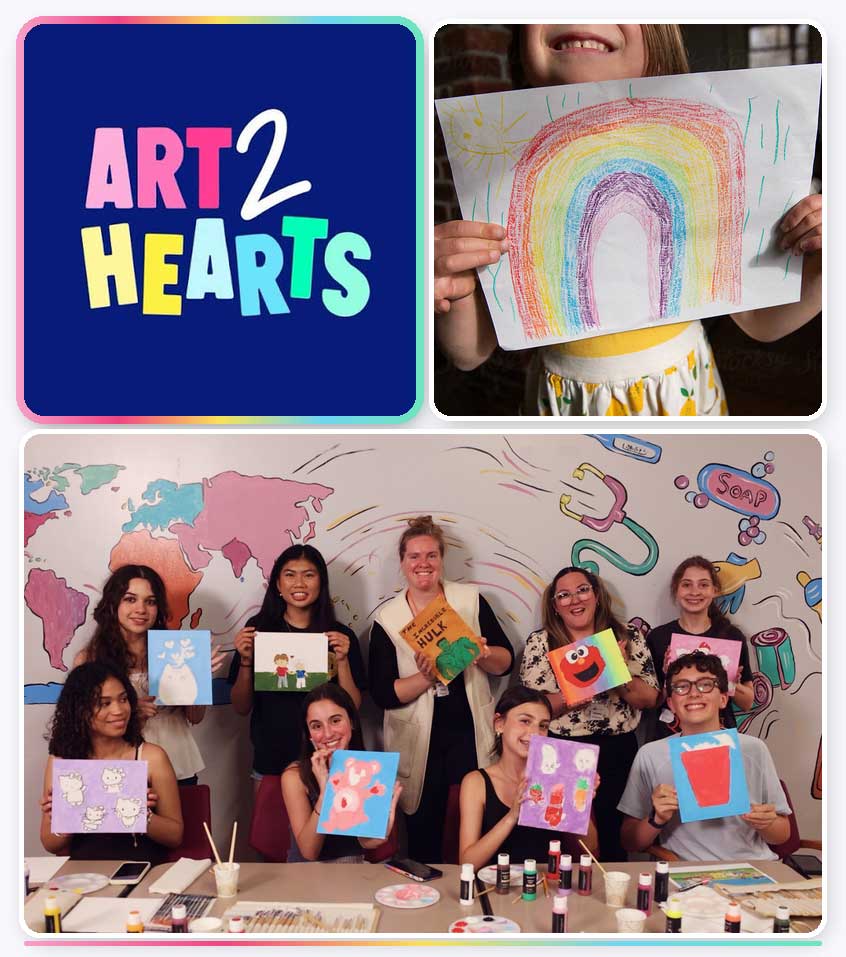
Art 2 Hearts Foundation
Healing in Color
For a child, a hospital room can feel frightening. There are unfamiliar machines and cold walls, and the world outside suddenly seems very far away.
Blake Crisses knows that feeling from childhood. Born with a congenital condition that required years of treatment, she formed some of her earliest memories inside hospitals. She met caring doctors and nurses there, but also sterile spaces that offered little comfort to a young child. Years later, that experience became the foundation of Art2Hearts Foundation, built around a beautifully simple idea: bringing art into pediatric hospitals.
Art2Hearts connects artists, volunteers, community groups and hospitals to create and donate colorful artwork for the spaces where children receive care. Community art-making events invite people of all ages and backgrounds to take part. Artists and collectors contribute their work, and hospital partners identify the spaces where art can make the environment warmer and more welcoming.
What begins with a single painting soon becomes something larger. A hospital room feels less clinical. A child has something bright to look at during a difficult day. A family feels a little more warmth during an uncertain time. And communities gain a real way to take part in the healing environment.
The organization has already reached 67 hospital partners, donated more than 7,800 artworks, and touched the lives of approximately 11,700 patients, while engaging thousands of community members along the way.
Perhaps the most powerful part of Art2Hearts, however, is its origin. Blake did not leave behind the memory of how a hospital once made her feel. She turned it into a way to improve the experience for the children who would come after her. Her work reminds us that healing depends not only on medicine but also on environment, emotion and hope. Sometimes, one colorful wall can make a difficult place feel a little more human.
In recognition of transforming personal experience into a growing movement of creativity, compassion, and healing, Art2Hearts Foundation receives a TALHero 2026 Jury Special Mention.
Divya Deepa Charitable Trust
Another Chance to Learn
Every year, children quietly disappear from classrooms, not because they lack the ability to learn, but because the system around them moved faster than they could follow. A missed foundation in reading or mathematics, compounded by poverty, family hardship, or years of falling behind, can turn school from a place of possibility into a place of repeated failure, until many of these children stop coming altogether.
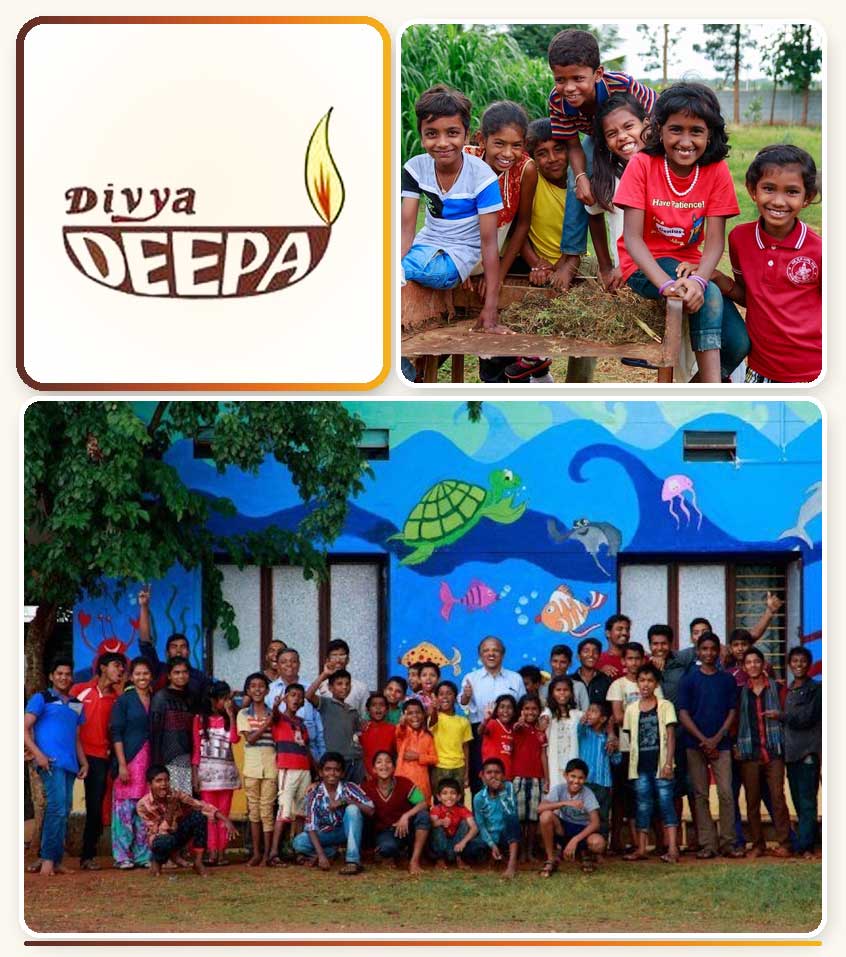
Divya Deepa Charitable Trust was created for children who do not fit easily into that system. Near Mysuru, the Trust runs Kaliyuva Mane, meaning “Home for Learning,” a free residential alternative school. It serves children who have dropped out, lived through difficult family circumstances, worked as child labourers, faced learning difficulties, or simply could not adjust to conventional schooling.
Its philosophy is powerful in its simplicity: the school should adapt to the child, rather than expecting every child to adapt to the school. Learning at Kaliyuva Mane begins not with a child’s age or expected grade, but with where that child actually is. A student who needs to go back to basic reading can do so without humiliation. A child carrying years of gaps in learning can move forward at their own pace. This education is supported by food, accommodation, healthcare and recreation, all within an environment built on care and empathy.
The model grew from grassroots experience. Founder Ananth Kumar began working with children in underserved communities near Mysuru in the early 1990s. He saw that children were falling behind not for lack of ability, but because poverty, family circumstances, limited support and rigid learning systems had narrowed their opportunities. Kaliyuva Mane grew out of that understanding.
Today, around 100 children study there each year. Since 2010, 61 students have appeared for the 10th-standard examination in English medium, and 56 of them have passed. Alumni have gone on to higher education, vocational programs and employment.
The deeper achievement, however, lies not in exam results but in giving a child another chance to believe that they can learn. Divya Deepa shows that when education begins with understanding rather than judgment, children once considered left behind can start moving forward again.
In recognition of creating a child-centered pathway back to education, dignity, and self-reliance, Divya Deepa Charitable Trust is honored as a TALHero 2026 recipient in the Nonprofit Category.
Gyaandaan Foundation – Sampoorna Shiksha
Closing the Gaps in Learning
A child may be enrolled in school and still not have everything needed to learn well. The school may lack digital resources. Teachers may need more support. Children may need help with foundational learning and life skills. Enrollment opens the door, but it does not guarantee learning.
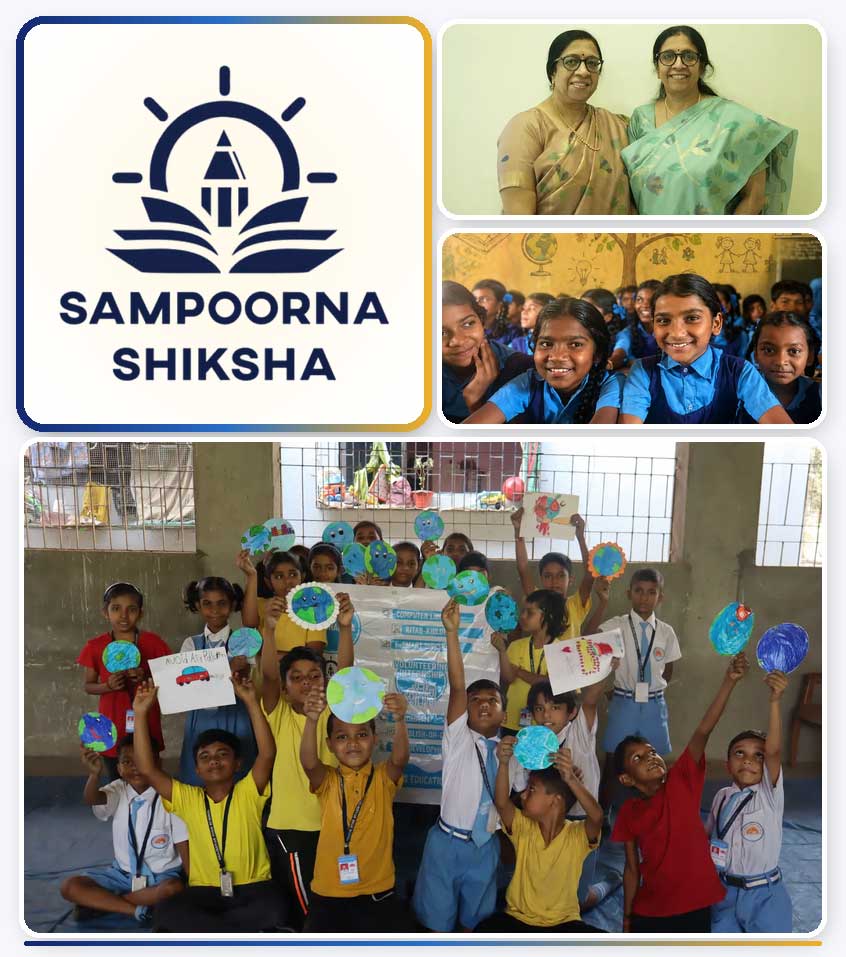
Sampoorna Shiksha, an initiative of Gyaandaan Foundation, works on exactly these gaps. Launched in 2020, it was founded by twin educators Lata Srinivasan and Pushpa Subramanian, who had already spent several years working in education. Its programmes reach children, teachers and schools in rural and disadvantaged urban communities, combining direct support for students with efforts to strengthen the learning environment around them.
Today, the organization reports reaching 21,000 students and teachers through 43 schools and community centres across 13 states, supported by around 1,000 volunteers.
Technology is one part of this work. Through its E-Smart Shiksha programme, Sampoorna Shiksha has set up 25 smart classrooms and 20 computer labs, benefiting more than 10,000 students.
Teachers are another. Through SS Academy, the organization has worked across 20 schools and community centres, training more than 150 teachers and benefiting over 5,000 students. Its broader programmes add academic support, foundational learning, English, life skills, digital education, learning materials and skill-development activities. Skill camps alone have reached more than 2,000 students over three years.
The organization has also developed Model Schools, where the focus moves beyond individual resources to improving the school environment as a whole. These initiatives have reached more than 800 students, with improvements in attendance.
What sets Sampoorna Shiksha apart is that it does not rely on a single solution such as scholarships, computers or tutoring. Instead, it works on the many elements that shape a child’s education: the classroom, technology, teachers, learning materials, academic support and the wider school environment. The goal is to strengthen the whole system around the child, so that a seat in a classroom becomes a real opportunity to learn.
In recognition of building a more complete and supportive learning ecosystem for children and educators, Gyaandaan Foundation – Sampoorna Shiksha is honored as a TALHero 2026 recipient in the Nonprofit Category.
Atchayam Trust
Most of us have seen someone begging or living on the street. The easiest response is to give something and keep walking. It eases the moment, but it rarely changes what happens tomorrow.
Atchayam Trust asks a much harder question: what would it take for this person never to have to return to the street?
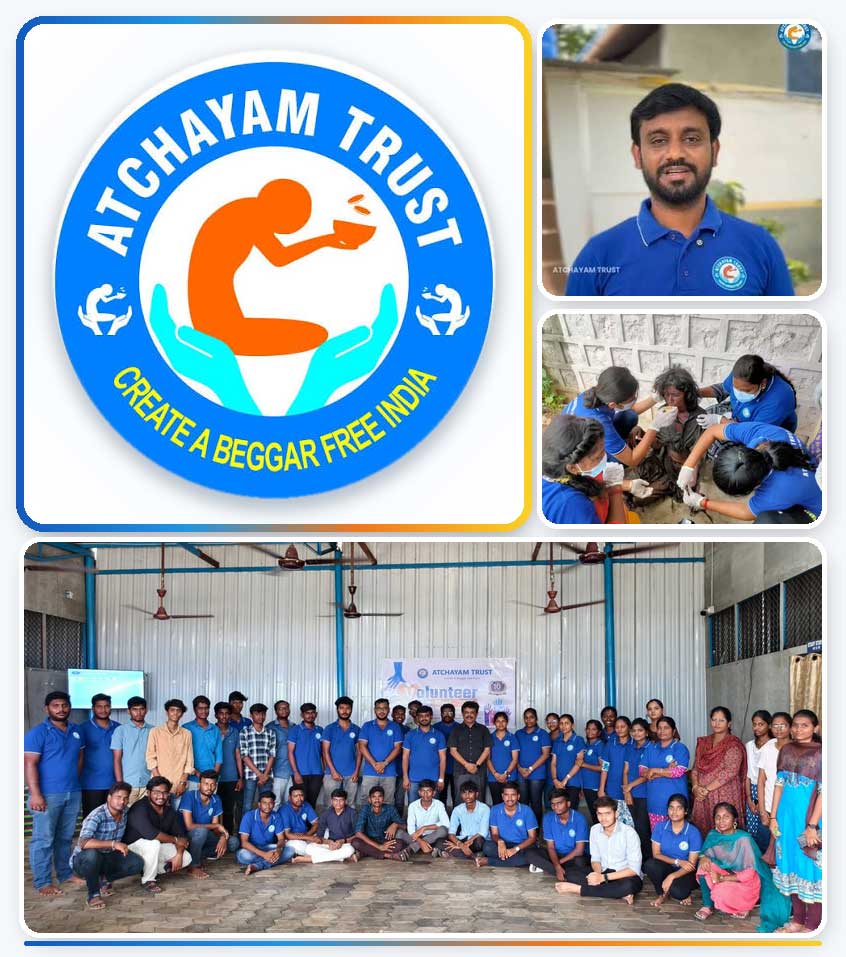
Founded in 2014 by P. Naveenkumar in Erode, Tamil Nadu, the Trust works toward a beggar-free and inclusive society. It serves some of the most overlooked people in India: individuals engaged in begging, homeless and destitute adults, the elderly, persons with disabilities, people living with mental illness, the terminally ill, and homeless women in need. Its guiding belief is that begging reflects a failure of systems, not of individuals, and that every person deserves the chance to recover their dignity.
Its work begins with rescue and immediate care, but it does not stop there. People are supported through shelter, healthcare, counselling and mental-health care, followed by rehabilitation, skills training and livelihood opportunities. Wherever possible, the journey ends with a return home. The Trust has helped reunite more than 225 individuals with their families.
The scale of this commitment is significant. More than 1,600 homeless individuals have been rescued and rehabilitated, over 13,200 people have received support, and more than 820,000 meals have been served in its homes. Today, the Trust runs several rehabilitation homes and a recovery centre across Erode district.
Its experience has also shaped how India responds to the issue. Atchayam is a member of the Government of India’s expert committee on rehabilitation and counselling of persons engaged in begging, contributing to national guidelines and training modules. It holds special consultative status on the National Consultative Committee mandated by the Supreme Court of India, and serves as an implementation partner of the Government of India’s SMILE scheme for beggary rehabilitation. In 2026, the Government of Tamil Nadu recognized it with the Best Institution Award.
At its heart, Atchayam’s work changes the question we ask. Instead of “What can we give this person today?”, it asks “What will help this person rebuild a life?” That shift, from momentary charity to lasting change, is what makes its work so meaningful.
In recognition of restoring dignity and building pathways from the street to a new life, Atchayam Trust is honored as a TALHero 2026 recipient in the Nonprofit Category.
Chelsea Investment Corporation
For a child, a stable home can mean staying in the same school all year. For a senior, it can mean growing older with security rather than fear. For a family, it is the foundation on which every other plan for the future is built. Yet for many families, seniors, veterans and people with disabilities, finding a safe and affordable place to live has become increasingly difficult.
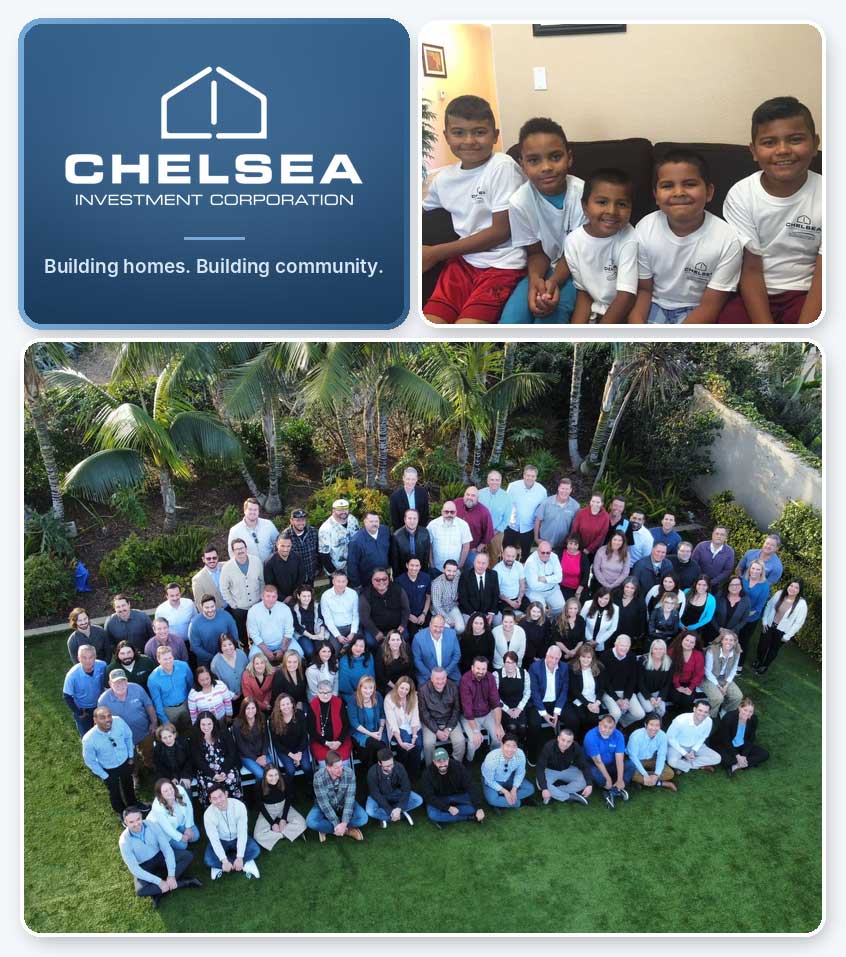
Chelsea Investment Corporation has spent decades working on that challenge. It treats affordable housing not as a short-term response but as long-term community infrastructure. The company develops and preserves affordable rental communities for low-income families, seniors, people with special needs and other underserved groups. It brings together cities, nonprofit partners, financial institutions and public agencies to turn complex housing needs into real places people can call home.
The scale of this work is significant. Chelsea has developed more than 150 affordable housing communities, representing more than $2 billion in development. Its portfolio spans family housing, senior communities, special-needs housing, rural developments and inclusionary housing across California and beyond.
The impact becomes clearest, however, when we look at the people behind those numbers. Harrington Heights in San Diego created hundreds of affordable homes for low-income residents, including people experiencing homelessness, veterans, and individuals with developmental disabilities. Other recent projects have been designed specifically for farmworker families and for households that include people with intellectual or developmental disabilities.
What makes Chelsea’s model important is that it sees affordable housing as far more than construction. It begins by asking who needs a home and what barriers they face. It then uses partnerships, financing and thoughtful development to create lasting stability. Each development stands for families paying manageable rent, people moving out of homelessness, seniors living with greater security, and individuals with disabilities finding their place in the community.
Chelsea Investment Corporation shows how business expertise can be directed toward one of society’s most basic needs.
In recognition of its sustained commitment to affordable housing and its impact on communities across California, Chelsea Investment Corporation is honored as a TALHero 2026 recipient in the CSR Category.
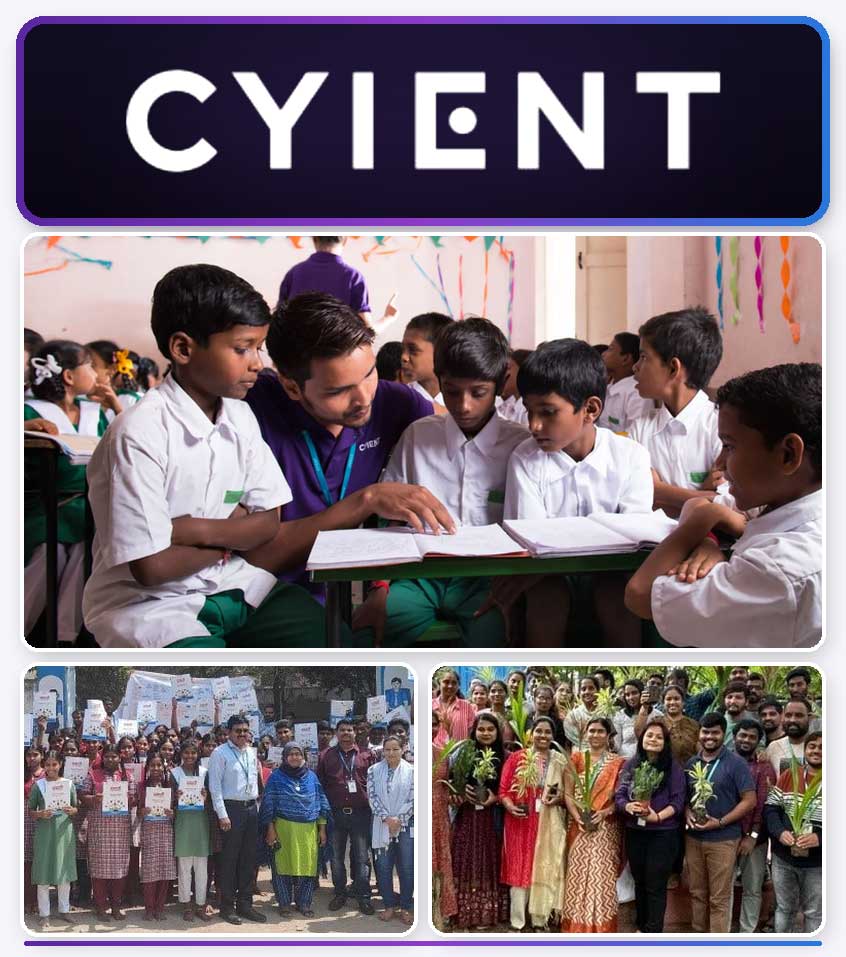
Cyient Foundation
Corporate social responsibility can bring resources to a community. But real change often depends on something harder to provide: staying the course.
Cyient Foundation has built its programmes around that idea, choosing to remain connected to communities year after year rather than moving from one short-term project to the next.
Its school-adoption programme began in 2007–08 with just two government schools and 850 children. Today, it supports 33 government schools and 21,103 children across four states, and its cumulative reach has crossed 200,000 children. The support covers school infrastructure, teaching, health and nutrition, and access to technology. The results are striking. Cyient reports that girls’ enrolment in adopted schools has risen from 20% to 56%, while the SSC pass rate has climbed from 30% to 88%.
Digital inclusion has become another pillar of the work. What began with four centres in 2014 has grown into a network of 83 Digital Centres. Around 35,000 people have received IT education through them, including more than 14,500 women trained in digital literacy.
The Foundation also helps young people and women step into work. Its skill centres have trained 9,282 youth and women in IT, electronics, manufacturing and vocational trades, with a reported placement rate of 85%.
Healthcare completes the picture. In FY2024–25 alone, Cyient’s programmes provided 28,101 general health check-ups, 4,258 cardiac assessments and 2,500 free eye surgeries.
What sets this CSR model apart is its continuity. A school adopted nearly two decades ago is not treated as a one-time infrastructure project. Over time, education, digital access, employability and healthcare have been built around the same communities, creating a lasting relationship between the company and the people it serves.
In recognition of its sustained, long-term commitment to education, digital inclusion, skills and healthcare in the communities it serves, Cyient Foundation is honored as a TALHero 2026 recipient in the CSR Category.
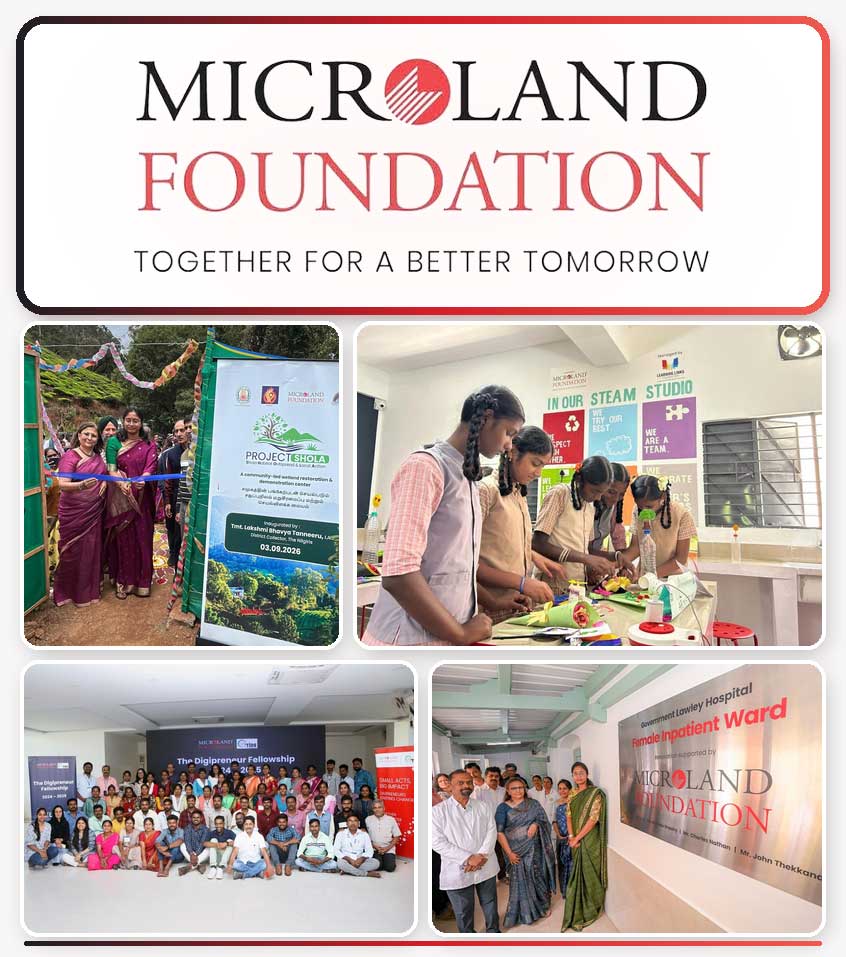
Microland Foundation
Sometimes the value of corporate social responsibility lies not in delivering every service itself, but in helping people reach the services that already exist.
Microland Foundation’s Digipreneur programme shows how powerful that idea can be. In many rural communities, families are eligible for government schemes but struggle to access them. The forms, the documents and the processes can feel out of reach. The programme has supported more than 60 local entrepreneurs who run digital kiosks, helping communities access more than 150 government schemes.
Through these entrepreneurs, Microland reports that more than 200,000 households have accessed benefits worth ₹95.97 crore, touching more than 850,000 lives. The model creates two outcomes at once. Rural entrepreneurs build their own livelihoods, while families get the help they need to claim benefits that might otherwise slip past them.
Education is another focus. Microland’s STEAM Smart programme has engaged more than 2,000 students in hands-on learning in AI, robotics and problem-solving, preparing them for a world shaped by technology.
The Foundation’s environmental work delivers results that can be clearly measured. Through its partnership with Clean Coonoor, it has managed 14,833 tonnes of waste, avoided an estimated 5,578 tonnes of CO₂ emissions, and produced 580 tonnes of compost. Its healthcare initiatives add preventive care, telemedicine, and support for community health infrastructure.
What sets Microland’s approach apart is its use of different models for different problems. In livelihoods, it creates local digital entrepreneurs. In education, it builds technology skills. In the environment, it focuses on measurable waste and carbon outcomes.
The result is CSR that goes beyond counting activities. It delivers outcomes that can be measured in economic, educational and environmental terms, and that make a real difference in people’s lives.
In recognition of creating measurable impact by connecting communities to opportunity, technology and a cleaner environment, Microland Foundation is honored as a TALHero 2026 recipient in the CSR Category.
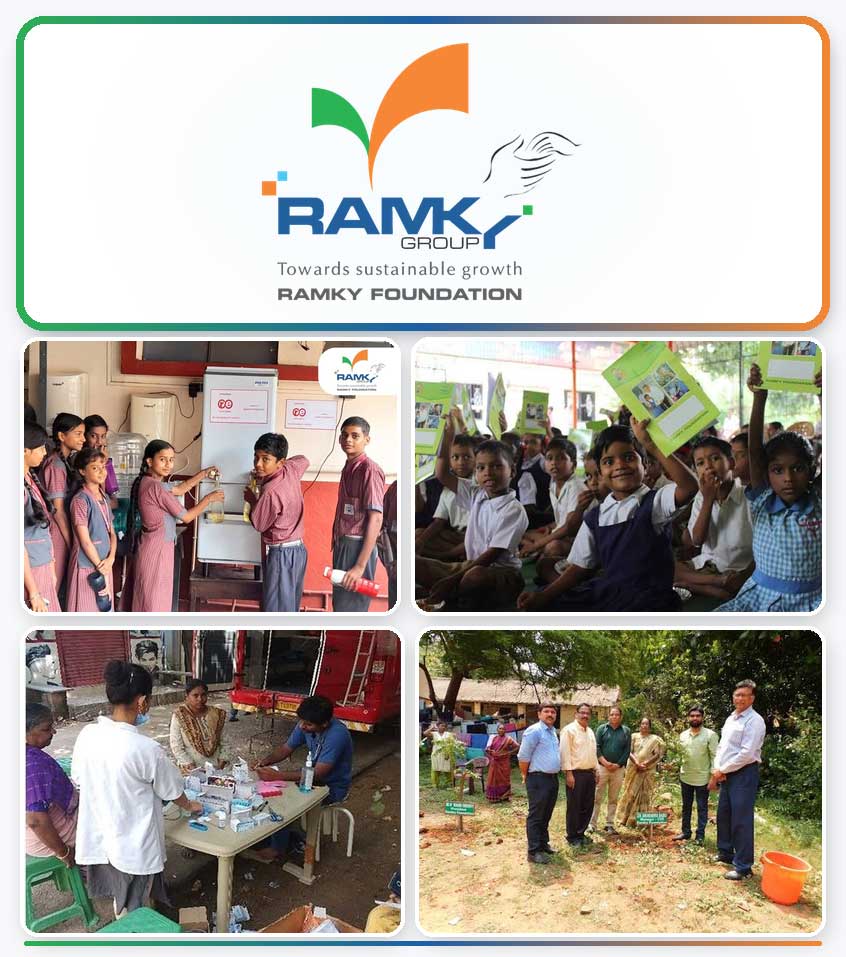
Ramky Foundation
Two Decades of Connected Change
Community development rarely fits neatly into one category. Water and natural resources shape livelihoods. Education shapes employment. Healthcare affects a family’s ability to work. And when women take part in the economy, the benefits reach the entire household.
Ramky Foundation has built its CSR work around these connections. Established in 2006 as the CSR arm of the Ramky Group, the Foundation works across natural-resource management, healthcare, education, skill development and women’s empowerment, treating them not as separate causes but as parts of the same community story.
The scale of its reach is substantial. The Foundation reports supporting approximately 1.5 million people through health programmes, 1.2 million through education, 693,000 through natural-resource management, 517,000 women through empowerment initiatives, and 82,000 people through skill-development programmes.
Its education work spans school support, scholarships, digital literacy, vocational education and mentorship, helping young people build the skills and confidence to move forward. Its healthcare programmes include health camps, immunisation, awareness drives, preventive care and community-health interventions that keep families healthy and able to work.
Just as important is how the Foundation works. It describes its approach as having moved beyond simply filling gaps toward building capacity. It partners with government bodies, communities, nonprofits and others, so that progress can continue long after a single programme ends.
Nearly two decades of this work have produced something larger than a series of annual projects. Ramky Foundation has built a broad community-development model, one that recognizes how closely people’s needs are connected and responds to them together.
In recognition of nearly two decades of connected, capacity-building community development, Ramky Foundation is honored as a TALHero 2026 recipient in the CSR Category.
TALHeroTH Awards 2026 Judging Committee
Barry Rudolph
CEO,TALLeaders
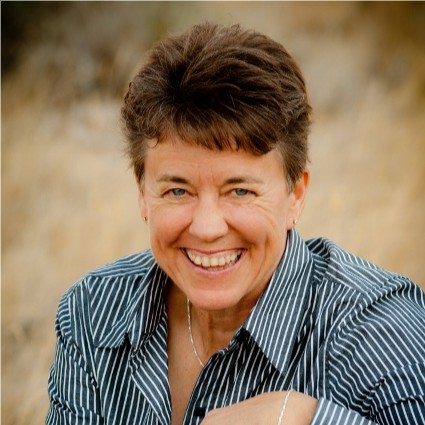
Sherry Winn
CEO & Founder
The Winning Leadership Company
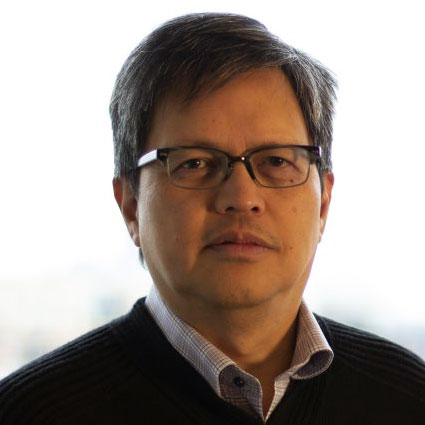
Manuel Serapio
Associate Professor
University of Colorado Denver
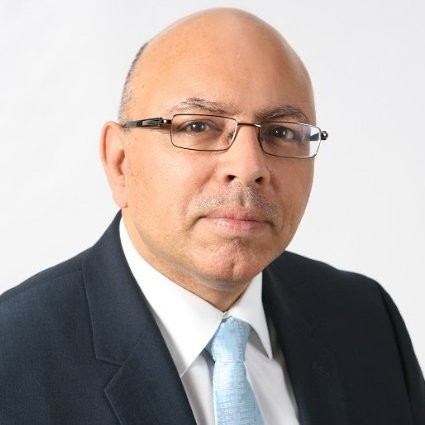
Randeep Sudan
Founder and CEO,
Multiverz
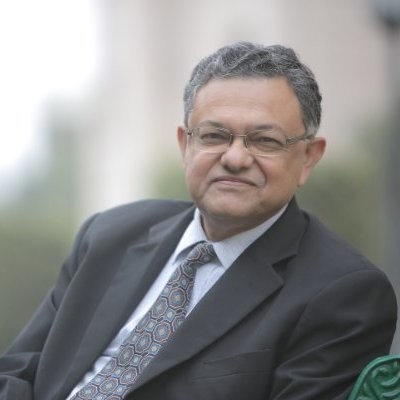
Shekhar Dasgupta
Business Manager,
Entrepreneur & Advisory Board Member
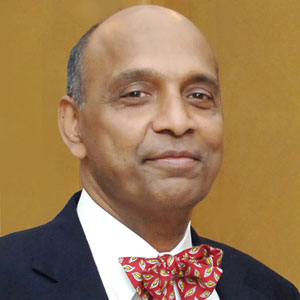
Gullapalli N Rao
Founder Chair,
L V Prasad Eye Institute (LVPEI)
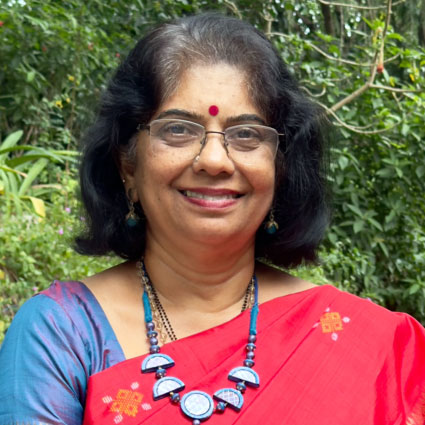
Dr. Kalpana Sampath
Social entrepreneur & Director,
EFIL Educational Services Pvt Ltd
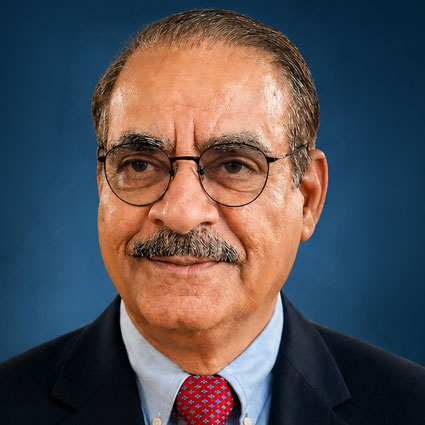
Sanjay Jalali
Business Leader
Sustainability Specialist I Investor