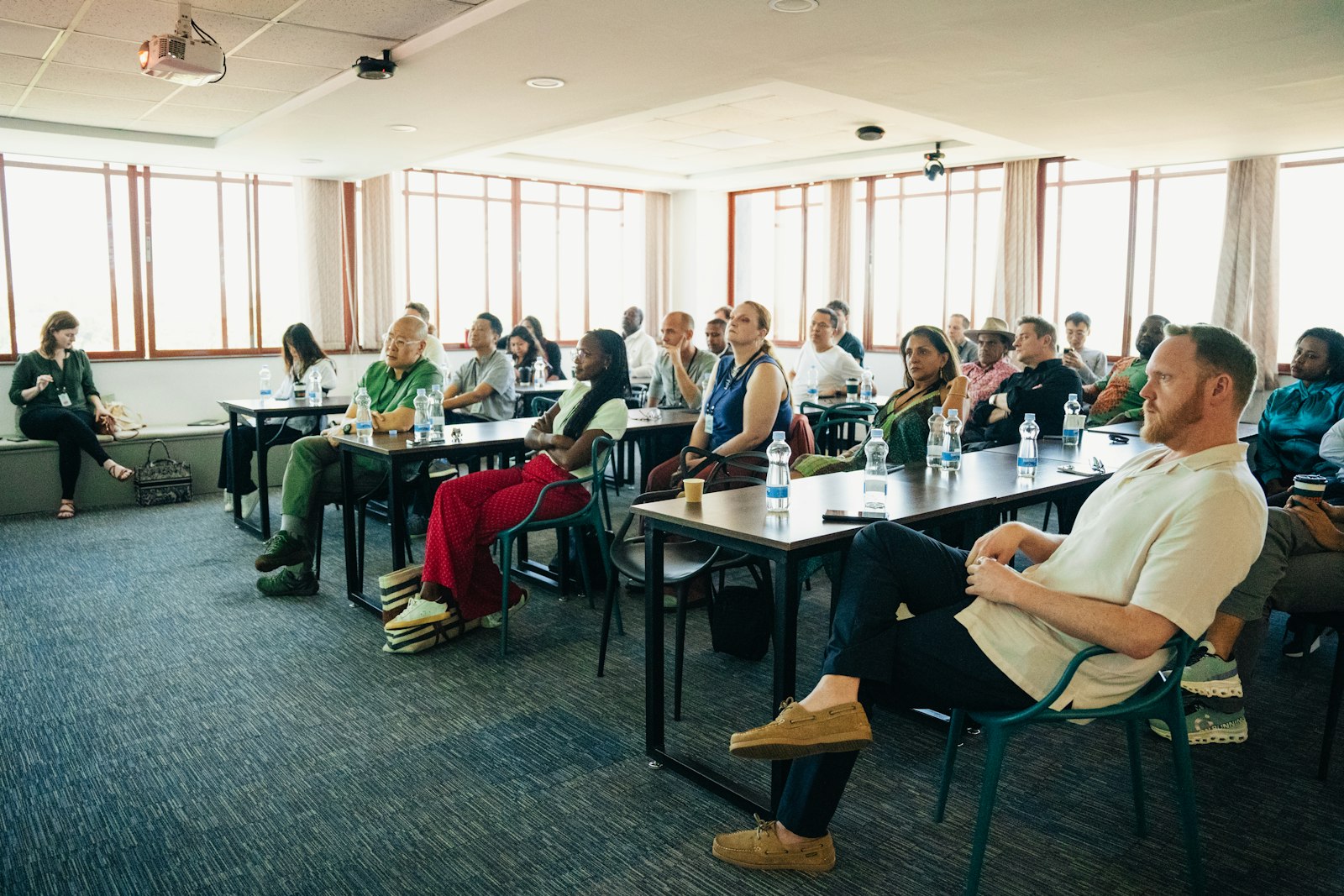
A useful discussion of preparing workers for automation and technological change begins with workers, jobseekers, entrepreneurs and communities most affected. They see unpredictable hours, unpaid labor, discrimination, care demands and enforcement gaps that averages can miss. Their safely gathered experience should guide diagnosis, while labor standards and credible evidence protect against exploitation.
Sustainable Development Goal 8 calls for sustained, inclusive and sustainable economic growth, full and productive employment and decent work for all. The International Labour Organization, World Bank, UNDP and OECD show why productivity, rights, inclusion and institutions must be considered together.
“Decent work grows when workers for automation and technological change expands both opportunity and worker power.”
Connecting the issue to human dignity
For this topic, a strong starting point is technology and work arrangements governed so flexibility and innovation do not weaken rights, security or human oversight. These elements reinforce one another. A person may be employed yet remain poor because wages are low or hours unpredictable. Training may be available yet inaccessible because of cost, disability or care responsibilities. A growing enterprise may create jobs while purchasing pressure undermines safety. Good planning looks beyond totals and asks who benefits, who carries risk and why.
Designing for rights, opportunity and inclusion
An effective response to workers for automation and technological change defines the specific employment, enterprise or institutional outcome. Workers contribute lived knowledge; employers bring operational experience; public institutions establish and enforce rights; unions and civil society support voice; and qualified specialists assess legal, safeguarding and health implications. Partnerships should fill a defined gap without replacing accountability.
- Make algorithmic decisions explainable and appealable: translate this principle into a funded task, a responsible owner and a documented review point.
- Measure who gains and who bears risk: translate this principle into a funded task, a responsible owner and a documented review point.
- Protect worker data and privacy: translate this principle into a funded task, a responsible owner and a documented review point.
- Extend social protection across work arrangements: translate this principle into a funded task, a responsible owner and a documented review point.
- Define employment responsibilities clearly: translate this principle into a funded task, a responsible owner and a documented review point.
Implementation quality matters as much as programme design. Staff need training and supervision. Participation should be accessible and never expose workers to retaliation. Personal data should be minimized and protected. Clear information about eligibility, rights, limitations and complaint routes helps people make informed choices without promising outcomes a programme cannot guarantee.
Checklist for responsible action
- Separate urgent protection needs from long-term labor-market change.
- Test eligibility, language, timing, care demands and technology for exclusion.
- Create confidential complaint, referral and appeal routes.
- Pilot a manageable intervention before expansion.
- Agree who will sustain and regulate it after initial funding.
How this could work locally
Consider a hypothetical workforce partnership working on workers for automation and technological change. Participants explain that a well-intended programme is difficult to use because of scheduling, care duties, language and fear of losing work. Employers identify operational constraints. The partnership revises delivery, clarifies rights and creates a confidential independent route for concerns. Expansion depends on verified progression into decent work rather than registrations.
The useful lesson is the learning process. Workers can identify hidden risks, enterprises can surface operational constraints, and specialists can challenge unsafe or unlawful assumptions. The team distinguishes what it delivered, what changed for workers and businesses, what remains uncertain and which external factors influenced the result.
Pitfalls that weaken results
Common mistakes include classifying workers to avoid responsibilities, confusing flexibility with worker control, and automating decisions without recourse. Teams also weaken programmes by selecting only easy-to-place participants, treating a short-term placement as sustained employment, or publishing a pilot as proof of systemic change. Few complaints do not automatically mean good conditions; workers may fear retaliation or lack a trusted channel.
Communication should protect dignity and agency. Do not use identifiable experiences of exploitation, health information, disability, migration status or family circumstances for promotion without a lawful basis, genuinely informed consent and professional review. Children and survivors must never carry the burden of proving an impact claim. Use composite examples unless a verified, consented public account is essential.
Measurement, learning and accountability
Measurement should combine reach, job quality, productivity, safety, equity and durability. Useful indicators include income stability and working time, algorithmic error and appeal outcomes, access to social protection, and opportunity across gender, disability and location. ILOSTAT provides official labor statistics, while protected qualitative evidence can explain barriers that headline employment rates miss.
Outputs such as people trained, jobs posted, loans issued or policies adopted help manage implementation, but they do not prove decent work. Outcomes ask whether income, security, rights, safety, productivity or progression changed. Disaggregate results only when privacy is protected, document missing data and examine non-participation, dismissal and dropout.
Define the baseline, review schedule and decision rules before launch. Combine administrative evidence with protected worker feedback and independent review. Compare cost with job quality and sustained progression, not activity alone. Report positive, mixed and negative findings so communities and funders can distinguish honest learning from promotion.
Authoritative resources and outbound references
- United Nations Sustainable Development Goal 8
- International Labour Organization
- World Bank jobs and development
- UNDP inclusive growth
- OECD employment
- ILO digital labour platforms
- OECD future of work
- ILO non-standard forms of employment
- ILO social protection
These sources provide global frameworks rather than advice for a specific worker or business. National labor, immigration, tax, safety and social-protection law determines responsible application. Individual legal, employment, health and financial decisions require appropriately qualified local professionals.
A practical way forward
Preparing Workers for Automation and Technological Change cannot be advanced by one hiring drive or training cycle. A credible next step is to define one barrier with workers and affected communities, map public duties and test a modest improvement with transparent safeguards. Keep what evidence and experience support, change what does not and explain decisions publicly.
The goal is not simply more economic activity. It is productive work and enterprise that protect dignity and distribute opportunity. Action on workers for automation and technological change advances SDG 8 when it reaches people facing the greatest barriers, strengthens rights and builds institutions that sustain fair outcomes beyond the first project cycle.
Partnership quality is another test. Government, workers, unions, employers, educators and civil society bring different authority and knowledge. Roles should be explicit, conflicts disclosed and participation resourced. Coordination adds value only when it closes a known gap or strengthens accountability around workers for automation and technological change.
Long-term planning should identify who will sustain services, enforce standards, finance recurring costs and handle complaints after a pilot. If those responsibilities are unclear, expansion can create dependence on support that disappears. Transition and accountability plans are part of decent work, not administrative afterthoughts.